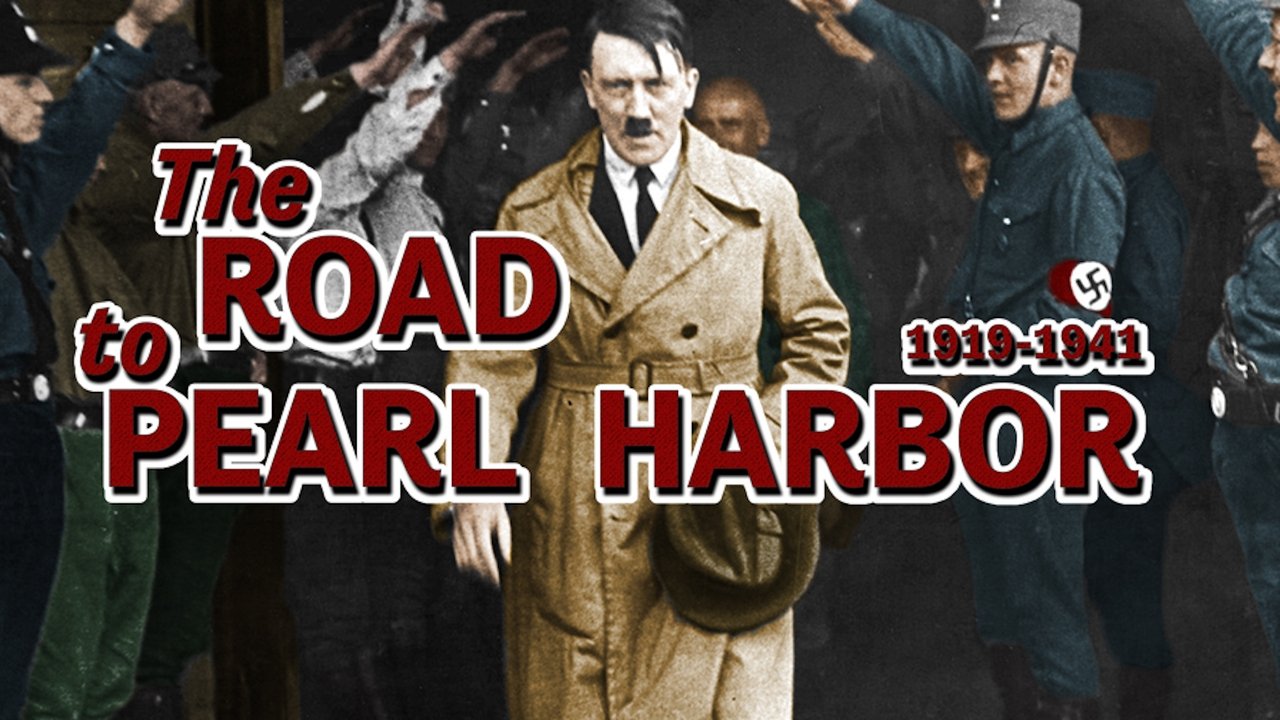
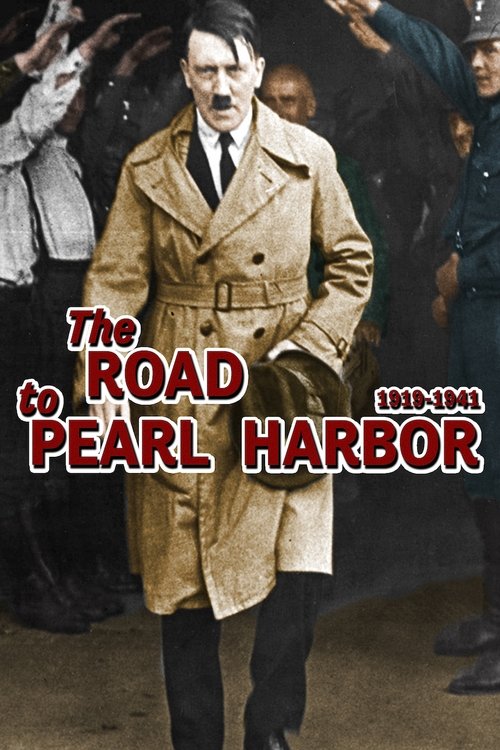
The Road To Pearl Harbor, 1919-1941 (2002)
Synopsis
An examination of the events that lead up to the attack on Pearl Harbour.
Episodes
Episodes

America in the Pacific: The Clash of Two Cultures
This overview of the U.S. and Japanese relationship, from the urn of the century until 1933, is a story of conflict. Japan emerged from World War I as a major power, but American diplomats made little effort to understand the Oriental mind. Our Japanese foreign policy, including immigration quotas and protective tariffs, does little to improve relations.
Radio, Racism And Foreign Policy
Disillusioned by the horrors of World War I, the U.S. tries to isolate from the rest of the world. Strict immigration quotas are imposed and a mistrust of foreigners and minorities ushers in an ugly of racism and ethnic discrimination. The advent of radio helps to project a standard image of the "good American," but at the same time lets in news of foreign nations.
Latin America: Intervention in Our Own Backyard
FDR's greatest foreign policy success, "The Good Neighbor Policy", was a key development in reversing the U.S. imperialistic attitude toward Latin America. For over a century, the Monroe Doctrine had been invoked to justify intervention in the Caribbean, Central, and South America. Pan-American relationships deteriorated rapidly until 1933, when the policy in intervention was abolished.
Versailles: The Lost Peace
President Wilson's hopes for world peace through collective security clash at Versailles with the harsh old-world politics of Europe, which wanted to punish Germany. The resultant treaty, sows the seeds of World War II. Wilson's mysterious behind-the-scenes adviser, Colonel Edward House, compromise Wilson's ideals. Then, influenza struck Wilson down during a critical period of negotiations.
War Comes to Pearl Harbor
After Japan's invasion of the Dutch Indies, Roosevelt cut off the American oil supply and imposed a total embargo. On November 5, 1941, General Tojo sent 2 peace options to the United States with the ultimatum that if neither alternative was accepted Japan would declare war. The United States rejected both proposals. One morning later, on December 7, 1941, Japan bombed Pearl Harbor.
Return to Isolationism
The President and the Senate fight for control of American foreign policy: the Senate wins. Wilson is opposed by a powerful coalition of conservatives like Senator Henry Cabot Lodge. He then embarks on a grueling 8,000 mile train trip to promote the League of Nations and suffers a stroke. Wilson refuses to compromise on the League of Nations and ironically is responsible for its defeat.
The First Salt Talks
In 1921, the world's first major disarmament conference limits the post war arms race, and the most important strategic weapon of the times, the battleship. General Billy Mitchell demonstrates the strength of air power by bombing obsolete battleships in the Chesapeake Bay. While the American military remains unconvinced, the Japanese were impressed as they would later demonstrate at Pearl Harbor.
FDR And Hitler: Their Rise to Power
A contrast in the style of FDR and Hitler shows how technological change and individual charisma can change history. FDR uses the radio to gain political advantage and Hitler utilizes the new sound movies. Hitler, representing a minority party, was appointed Chancellor and rapidly gained power through Nazi propaganda and terrorism. Roosevelt tried new methods of attacking the economic crisis.
The Great Depression And Foreign Affairs
The Depression is a traumatic national experience which shatters U.S. self-confidence and paralyzes foreign policy, thus leading to further isolationism. The world-wide depression gives rise to dictators, but the U.S. is so distracted with domestic problems that it ignores the threat. The London Naval Conference insults Japan and the Japanese invade Manchuria, as a preoccupied U.S. does nothing.
The Italian-Ethiopian War: Africa in World Affairs
The short-lived, but brutal Italian-Ethiopian War leads to an examination of Italian Fascism the character of Mussolini and how he came to power. Mussolini ruled with apparent effectiveness and was hailed by leaders of the anti-Communist world, until his dreams of an empire led him to invade Ethiopia. The incident was one of the chief episodes paving the way for World War II.
FDR and Churchill: The Human Partnership
The close personal friendship between Roosevelt and Churchill had a profound effect on the history of the Western world. Roosevelt posted "lend-lease" as the most practical means of allowing the U.S. to remain neutral while arming Britain and its allies. Due to the political wiles of the two leaders. the bill was passed against bitter opposition and British morale received an enormous lift.
The Recognition of Russia: A Climate of Mutual Distrust
From the Bolshevik Revolution in 1917 until the Roosevelt administration officially recognized the U.S.S.R. in the first detente in 1935, American relations with the Soviet Union were mistrustful and hostile. Cold War attitudes can be traced back to this period and the national paranoia over Bolshevism.
The Phony War
Hitler's assumption that England would not go to war to defend Poland triggers World War II. The Nazis sweep over Europe and launch their air attack on Britain. American public opinion waivers between desire to help Britain and fight or to maintain neutrality. The 1930's ended with American still unconvinced that its destiny was intertwined with the rest of the world.
The Spanish Civil War
The Spanish Civil War was a microcosm of the ideological conflict of this century. When Spanish fascists under Franco rebel against the republican government, a civil war erupts. Mussolini and Hitler send troops to Franco's aid. Soviet support of the Loyalists reinforces the fascist claim that it is communism they are fighting, and the Americans are confused over issues of fascism and communism.
Japan Invades China: Crisis in the Far East
In 1937 Japan was bent on establishing an empire. Encouraged by the lack of Western resistance, Japan took control of French Indochina, the Dutch Indies, Burma, Malaya, and the Philippines. By mid-1941, Roosevelt had enforced a total embargo, freezing all assets originating in Japan. In the face of this economic pressure, the Japanese government decided to force the United States into war.
FDR and Hitler: The Dynamics of Power
Both Hitler and Roosevelt appreciated the value of mass communications. FDR began his series of "fireside chats" to reassure and inform the people while Hitler assigned Josef Goebbels as Minister of Propaganda to control the public through radio and rallies. F.D.R. wished to stabilize the economy and restore confidence to the people. Hitler began rearmament in hopes of national expansion.
Details
Original Title
The Road To Pearl Harbor, 1919-1941
Status
Returning Series
Seasons
1
Episodes
16